
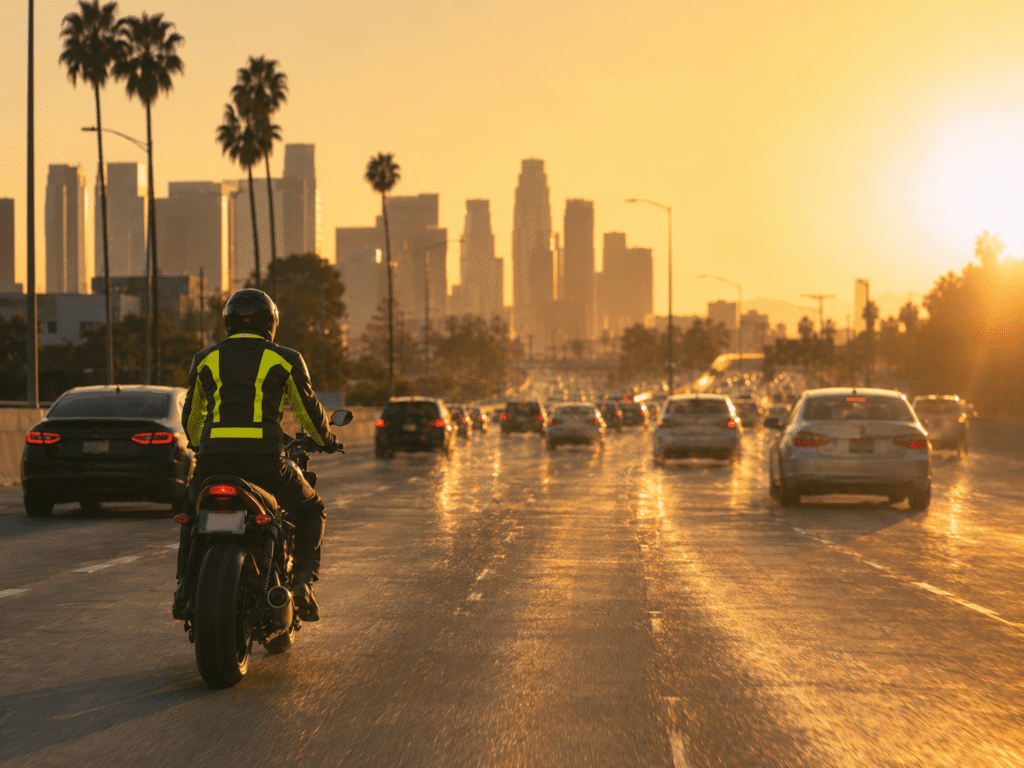
Motorcycle Safety and Considerations in Hot Weather
Hot weather multiplies the risks Southern California motorcyclists already face on the road. Rising temperatures change several parts of a ride at once:
- Rider stamina and reaction time
- Protective gear choices
- Pavement grip and road conditions
- How well other drivers can see a motorcycle
Understanding those changes can reduce the odds of a crash and clarify what happened if one occurs anyway.
If you or a loved one have been involved in a motorcycle accident, call us for a free and confidential consultation.
Hydration and Physical Preparedness
Heat exhaustion builds gradually. It erodes the same reaction time and judgment a motorcyclist depends on to avoid a hazard created by another driver.
Riders should drink water before a ride begins and continue at every stop, rather than waiting until thirst appears. Thirst is a sign that dehydration has already started to affect concentration and grip strength. A hydration pack worn on the back, or a tank bag with a drinking tube, lets a rider take in fluids without pulling over. On rides longer than an hour, electrolyte replacement becomes useful, especially under full leather or textile gear that traps body heat instead of releasing it.
Early symptoms of heat exhaustion call for a stop in the shade before a rider feels unable to continue. Watch for:
- Dizziness or lightheadedness
- Heavy, sudden sweating
- Muscle cramping
For a free legal consultation, call (877) 735-7035
Protective Gear in High Temperatures
Full protective gear remains the standard recommendation regardless of temperature. Heat does not change what happens when skin meets asphalt at speed, but riders can adapt their gear without sacrificing protection.
- Mesh jackets and pants with CE-rated armor allow airflow through the fabric while still covering impact zones.
- Cooling vests with evaporative panels or gel inserts, worn under a jacket, lower core body temperature when airflow drops during stop-and-go traffic.
- Cooling bladders built into jacket linings circulate water-cooled fluid across the torso. They are sold as aftermarket additions for riders who already own armored gear.
- Ventilated helmets with adjustable intake and exhaust vents reduce heat buildup around the head without lowering the shell’s protective rating.
Skipping a jacket or gloves to stay cool trades a small amount of comfort for protection a rider is far more likely to need after a crash.
Riding at Different Times of Day
Pavement in Southern California can run well above the air temperature during peak afternoon hours. Softer asphalt changes how a motorcycle grips through a corner, particularly on a bike loaded with luggage or a passenger.
| Time Window | What Changes | What to Watch For |
| Midday (roughly noon–4 p.m.) | Peak air and pavement temperature | Softer asphalt affects cornering grip; rider fatigue builds fastest |
| Early morning | Cooler temperatures, lighter traffic | Low sun-angle glare; increased wildlife activity near open land |
| Early evening | Falling temperatures | Low sun-angle glare; increased wildlife activity near open land |
A tinted or photochromic visor helps offset glare outside the midday hours, when the sun sits lower on the horizon.
Click to contact our personal injury lawyers today
Motorcycle Maintenance in Summer Heat
Heat changes how a motorcycle performs and should factor into a pre-ride check regardless of trip length:
- Tire pressure rises as ambient and pavement temperatures climb, so pressure should be checked cold and more frequently in summer months.
- Coolant levels deserve closer attention in stop-and-go traffic during a heat wave, when engines run hotter with less airflow across the radiator.
- Oil condition should be current for the season, since heat accelerates the breakdown of oil that is already due for a change.
- Brake fluid can degrade faster after extended exposure to heat during storage, particularly for bikes parked outdoors or in a garage without ventilation.
- Battery terminals corrode faster in heat, and a weak battery is more likely to fail during a hot start after a bike has been sitting in the sun.
Complete a Free Case Evaluation form now
Hazards Created by Other Drivers in Hot Weather
Motorcyclists also face risks created by how other drivers cope with heat. Several habits are common in the summer months:
- Folded window sunshades. Accordion-style shades meant to keep a parked car cool are sometimes left folded against the dashboard or visor while the car is in motion, blocking a driver’s view of an intersection.
- Heavily tinted windows. Tint that falls within California’s legal limits on rear and side glass can still make it harder for a driver to spot a motorcycle in a blind spot during bright glare.
- Air conditioning distraction. Drivers running the AC at high settings sometimes focus more on cabin controls than mirror checks. Rolled-up windows also cut the ambient road noise that might otherwise signal a motorcycle nearby.
- Increased travel volume. Summer brings more vacation and long-distance travel, adding unfamiliar drivers and rental vehicles to Southern California roads during the same hours riders may already be managing heat fatigue.
California Liability Considerations
California law imposes a duty on every driver to exercise reasonable care to avoid injuring others on the road, codified in Civil Code section 1714. When a driver’s reduced visibility contributes to a collision with a motorcyclist, whether from a sunshade left in place or heavily tinted glass, that duty can become central to a negligence claim.
California follows a comparative negligence system, meaning a rider’s own conduct can reduce but does not eliminate a damages award if the other driver bears primary fault for the crash. A driver who violates a Vehicle Code provision tied to an unsafe lane change or an obstructed view may also face a presumption of negligence under Evidence Code section 669, which applies when a statutory violation causes the type of harm the law was designed to prevent.
If you or a loved one has been injured in a motorcycle crash in Los Angeles or the San Fernando Valley, the attorneys at J&Y Law can evaluate whether another driver’s negligence contributed to the collision.
California law generally allows two years from the date of a crash to file a personal injury claim under Code of Civil Procedure section 335.1, though a shorter six-month deadline applies when a government entity is involved. J&Y Law handles motorcycle injury cases on a contingency-fee basis, meaning clients pay no upfront costs and owe no fee unless the firm recovers compensation. Contact J&Y Law today for a free consultation.
Call or text (877) 735-7035 or complete a Free Case Evaluation form