Do You Need a License for an Electric Bike?

Key Takeaways
- Most electric bikes in the United States do not require a driver’s license if they meet federal safety definitions.
- E-bikes can travel up to 28 mph, reducing reaction time in traffic.
- Electric bike accidents are increasing as usage grows nationwide.
- Young riders are among the fastest-growing groups of e-bike users, raising new safety concerns.
- Even though a license may not be required, practice and road awareness are essential before riding in traffic.
Electric bikes have become one of the fastest-growing forms of transportation in the United States. Commuters use them to avoid traffic, students ride them to school, and many families are purchasing them as a fun alternative to traditional bicycles.
But as their popularity grows, so do questions about safety and legal requirements.
Classes of Electric Bike in the U.S.
In most states, you do not need a driver’s license to ride an electric bike if the bike meets federal e-bike classifications.
Under guidelines recognized by many states, electric bikes generally fall into three categories:
- Class 1: Pedal-assist only, maximum assisted speed of 20 mph
- Class 2: Throttle-assisted, maximum speed of 20 mph
- Class 3: Pedal-assist with a maximum speed of 28 mph
These bikes are typically treated similarly to traditional bicycles rather than motor vehicles.
The Consumer Product Safety Commission defines low-speed electric bicycles as having a motor of 750 watts or less and a top assisted speed of 20 mph for federal consumer safety standards.
Source: https://www.cpsc.gov/Business–Manufacturing/Business-Education/Business-Guidance/Bicycles/Electric-Bicycles
However, individual state laws can vary, and higher-powered or modified e-bikes may fall into moped or motor vehicle classifications that require licensing.
For a free legal consultation, call (877) 735-7035
How Fast Can Electric Bikes Go?
One reason safety experts are paying closer attention to e-bikes is their speed.
Some Class 3 electric bikes can reach 28 mph, which is significantly faster than the average speed of a traditional bicycle.
At those speeds:
- reaction times shrink dramatically
- stopping distances increase
- the severity of crashes can rise
If a car pulls into traffic unexpectedly, a rider traveling near 30 mph may have very little time to react.
This is one reason safety organizations recommend that riders spend time practicing before using an electric bike on busy roads.
How Common Are E-Bike Accidents?
As electric bikes have become more common, accident rates have also increased.
A study published by the U.S. Consumer Product Safety Commission found that e-bike injuries treated in emergency departments increased dramatically in recent years, with tens of thousands of injuries reported nationwide.
Source: https://www.cpsc.gov/Newsroom/News-Releases/2023/CPSC-Warns-of-Surge-in-E-bike-and-Scooter-Injuries
Other research has shown that injuries related to e-bikes rose nearly 50% over a multi-year period, reflecting the rapid growth in ridership.
Source: https://injepijournal.biomedcentral.com/articles/10.1186/s40621-022-00385-4
Many of these crashes involve:
- collisions with motor vehicles
- falls at high speeds
- crashes involving pedestrians
Click to contact our personal injury lawyers today
Young Riders Are Driving the Rise in E-Bike Use
One major factor behind the rise in e-bike accidents is the growing popularity of electric bikes among younger riders and teenagers.
Many parents view e-bikes as a convenient way for kids to travel to school or activities. But younger riders often have limited experience navigating traffic, intersections, and pedestrians.
Unlike traditional bicycles, electric bikes can accelerate quickly and reach higher speeds.
For inexperienced riders, that combination can make road situations more difficult to manage.
Even though a license may not be required, experience and road awareness still matter.
Complete a Free Case Evaluation form now
What Safety Risks Do E-Bike Riders Face?
Electric bike riders must navigate a wide range of road hazards.
Common risks include:
- cars turning into traffic without seeing a rider
- parked vehicles opening doors into bike lanes
- pedestrians stepping into shared paths
- uneven pavement or road debris
- intersections with limited visibility
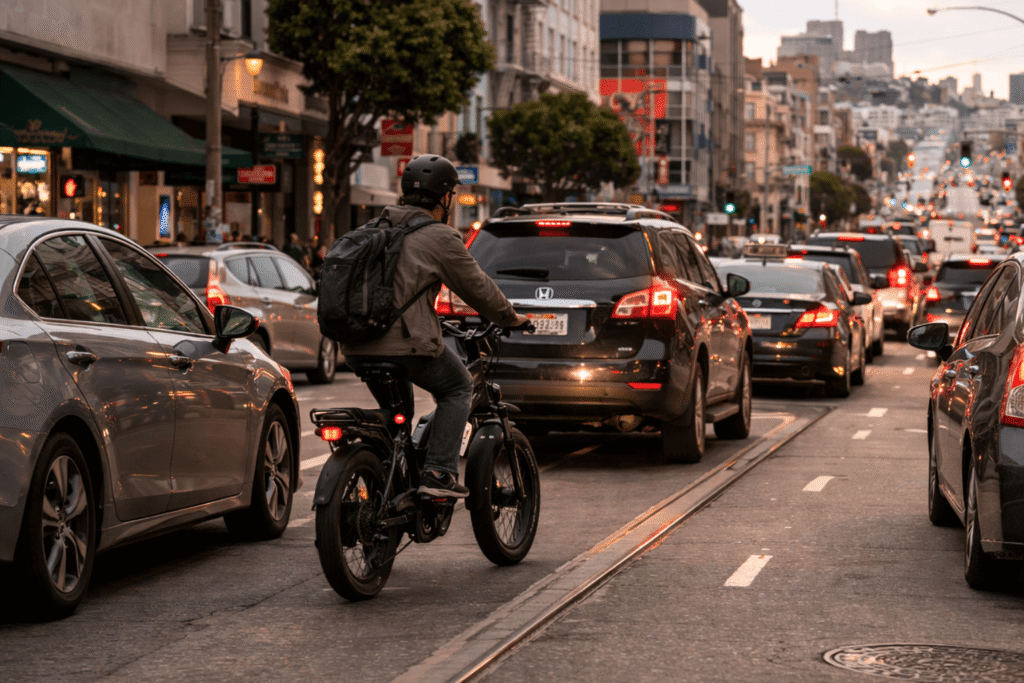
In cities especially, riders may also be navigating crowded sidewalks, crosswalks, and pedestrian areas, which can increase the risk of accidents.
Electric Bike Safety Tips
Riders can reduce the risk of accidents by following a few important safety practices:
- Wear a properly fitted helmet
- Practice riding in a low-traffic area before riding on streets
- Follow local bike lane rules and traffic signals
- Use lights and reflective gear at night
- Slow down near pedestrians and crowded areas
- Be cautious when approaching intersections or parked cars
Even experienced cyclists should take time to adjust to the speed and acceleration of electric bikes.
Injured in an Electric Bike Accident?
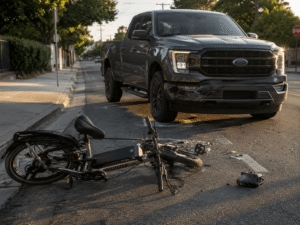
Electric bikes can be a convenient and enjoyable way to travel, but accidents can happen quickly. Collisions between cars and e-bikes can lead to serious injuries, including broken bones, spinal injuries, head trauma, and traumatic brain injuries.
If you or a loved one was injured in an electric bike accident, understanding your legal options may be important for protecting your health and financial recovery.
Contact our team today to discuss your situation and learn how we may be able to help.
Call or text (877) 735-7035 or complete a Free Case Evaluation form