Found Mold in Your Rental Property? Why It’s A Structural and Neurological Threat

Following a recent premises liability and habitability case involving catastrophic mold damage inside a Los Angeles apartment, we spoke with experts across real estate, roofing, HVAC, plumbing, psychiatry, and property management. Their verdict was unanimous: most people – including many landlords – don’t understand how dangerous mold really is.
The case unfolded after a tenant discovered a hidden cavity of rotted drywall behind what had recently been painted over. While the lawsuit focused on habitability failures, experts say the incident reflects a far larger, nationwide blind spot in how we define “safe housing.”
Mold in Rental Property is a Hidden Crisis Inside America’s Walls
Few environmental hazards are as misunderstood as mold. Roughly 70% of U.S. homes have some degree of mold, according to the National Institutes of Health, yet most infestations spread long before tenants see stains or smell mustiness. Moisture intrusion is widespread: the EPA estimates that 30–50% of all buildings contain damp conditions ideal for hidden mold growth.
And mold is not just about air quality. It eats wood and weakens structural framing. It accelerates roof failure. Emerging research shows that it may impair cognition.
Mike Wall, a Gulf Coast property investor, learned this the hard way:
“A small plumbing leak behind a kitchen cabinet cost me thousands. Now I do yearly plumbing and roof inspections. It’s smarter to catch problems early instead of waiting for complaints.”
Landlords Learn Too Late
Few landlords intend to ignore hazards, but many don’t know where to look or how long damage has been developing when it comes to mold in rental property.
In distressed properties, the pattern is almost always the same. Lisa Martinez of TX Cash Home Buyers says:
“Landlords miss the slow leaks or bad ventilation until a tenant calls about a ceiling caving in. The codes exist, but problems slide when you ignore small repairs or skip HVAC work.”
Industry-wide, this lack of proactive maintenance is costly. According to HomeAdvisor, the average untreated water leak causes $2,600–$7,000 in mold damage, while remediation after structural involvement can exceed $30,000–$60,000.
But cost is only part of the story.
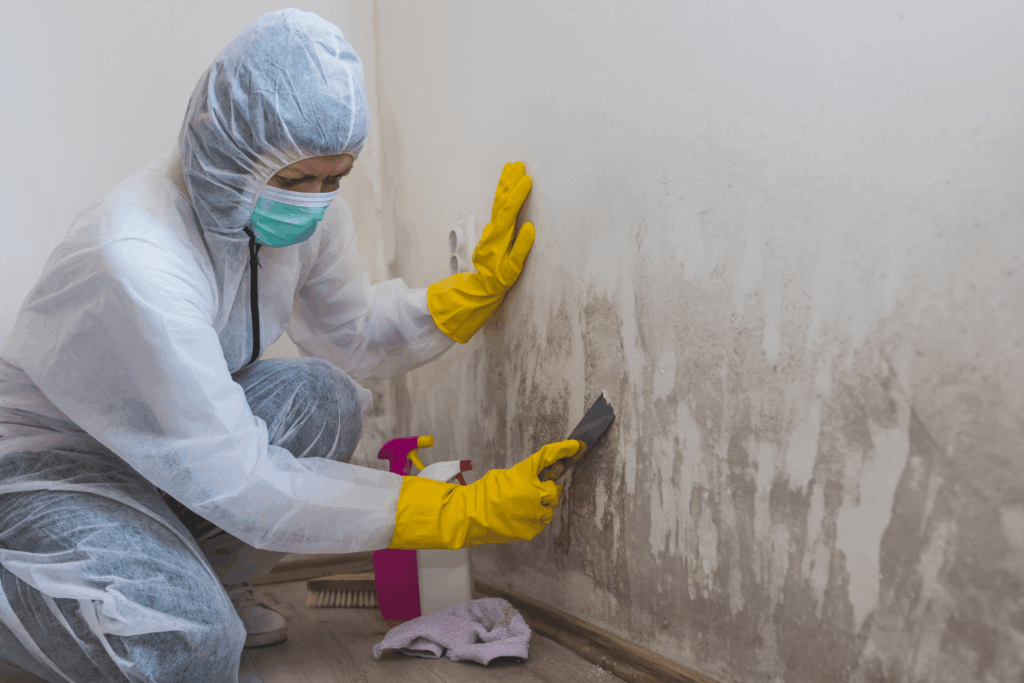
Mold Is a Structural Hazard, Not a Surface Issue
To understand the true scope of mold problems in American housing, we interviewed experts across the country. Despite working in different industries, their message was identical: visible mold is the very last stage of a much deeper structural failure.
Lara Woodham, Director at Rowlen Boiler Services, says the public dramatically underestimates how long moisture has been at work before mold ever becomes visible.
“The worst damage happens inside walls. Thermal cameras during regular inspections catch problems early — long before tenants smell anything.”
This isn’t theoretical. The Insurance Information Institute reports that water damage is the second-most common home insurance claim in America, and mold frequently follows slow, undetected leaks.
Real estate investor Liz Hutz emphasizes that the true danger grows in places homeowners never look.
“Mold grows quietly inside wall cavities and under floors until it compromises joists and studs. By the time tenants notice a smell or stain, it might already be unsafe.”
Taken together, the experts’ perspectives form a unified warning: moisture is the root problem. By the time mold becomes visible, the damage has already been unfolding behind the walls, under floors, or within the roof structure for months or years.
For a free legal consultation, call (877) 735-7035
The Neurological Fallout: A Silent Public Health Problem
While most laws treat mold as a structural or respiratory issue, new clinical insights show it may be a neurological threat.
A National Academies of Sciences report confirms that damp indoor environments increase the risk of cognitive impairment, fatigue, memory decline, and neuroinflammation. Children and older adults are particularly vulnerable.
Psychiatrist Dr. Ishdeep Narang describes mold’s neurological effects as a “double hit”:
“Neurotoxicity from spores and chronic stress from feeling unsafe. That combination attacks the most vulnerable brains long before a wall collapses.”
According to Dr. Narang:
- In children, mold exposure can mimic PANS/PANDAS-like symptoms.
- In older adults, it can resemble early-onset dementia.
He warns:
“A building may pass a structural inspection while degrading the occupants’ mental faculties. If a home causes cognitive harm, it has failed its purpose.”
CDC data supports this concern: mold exposure is linked to neurological symptoms in up to 30% of affected households, especially where chronic dampness persists.
Why Moisture Goes Unnoticed: The Slow Creep Problem
Mold thrives in places where moisture lingers, and moisture often lingers silently. It works its way through walls, ceilings, and flooring long before anyone realizes there’s a problem. Because these early signs are so subtle, they rarely trigger urgency from tenants or property owners. The EPA notes that early moisture detection is the single most important predictor of preventing mold-related structural failures, yet most moisture issues remain hidden until the damage has already become extensive.
Click to contact our personal injury lawyers today
Why Enforcement Fails: A Reactive System
Professionals across real estate, roofing, property management, and home maintenance pointed to the same systemic flaw: our enforcement system responds to mold only after it has already become dangerous.
California Civil Code §1941.1 requires landlords to provide habitable, weatherproof, and mold-free living conditions. But in practice, these protections are often enforced far too late.
Roofing specialist Ali Hassan sees the same failures from above:
“The laws set high expectations, but proactive inspections rarely happen. Attic-level failures – which cause the worst mold – are almost never checked.”
This reactive approach leaves tenants exposed while landlords assume compliance simply because no complaints have been filed, even as hidden moisture intrusion continues unchecked.
Complete a Free Case Evaluation form now
Prevention Is Simple, But Rarely Done
Despite these widespread failures, experts emphasized that effective mold in rental property prevention is neither complicated nor expensive. It just requires consistency.
Seamus Nally, CEO of TurboTenant, stressed the importance of real oversight:
“Annual professional inspections. Not walk-throughs, but actual inspections. And respond to tenant concerns immediately.”
These recommendations align with the American Society of Home Inspectors (ASHI), which identifies moisture as the leading cause of structural deterioration.
Together, the insights are clear: our systems wait for mold to appear, but mold appears only after damage has already taken hold.
What Needs to Change: A Rethinking of Habitability
Experts called for a shift from reactive complaint-based systems to proactive safety standards, including:
- Annual licensed inspections
- Mandatory moisture mapping for rental units
- Roof and attic assessments every 6–12 months
- HVAC and ventilation audits
- Faster maintenance response requirements
- Documented, trackable maintenance logs
Above all, experts say the definition of “habitable” must evolve. A home that accelerates cognitive decline or harms a resident’s neurological health is every bit as unsafe as one with a cracked foundation or failing structure.
How Do You Know If You Have a Black Mold Case?
Mold in rental property is not a housekeeping problem. It is a structural warning, a serious health hazard, and increasingly, a documented neurological threat. When landlords delay repairs or cut corners, they are placing tenants’ physical safety, cognitive health, and long-term wellbeing at risk.
Experts across multiple fields agree that by the time mold becomes visible, the damage has already been occurring for a long time.
If you have questions about a potential black mold case, talk to our legal team here at J&Y Law. Call (877) 711-2175 to have a free, confidential consultation.
Call or text (877) 735-7035 or complete a Free Case Evaluation form