
Amusement Park Injuries: When “Looks Cool” Isn’t Legally Safe

Key Takeaways
- Many serious amusement park injuries don’t happen on rides, they happen between them.
- Modern park design prioritizes immersive visuals that can quietly increase slip, trip, and fall risks.
- Courts are increasingly scrutinizing design choices, staffing, and transition zones, not just ride mechanics.
- Amusement parks face growing exposure as injuries reveal gaps between aesthetics and real-world human behavior.
Why Amusement Park Injuries Are On The Rise
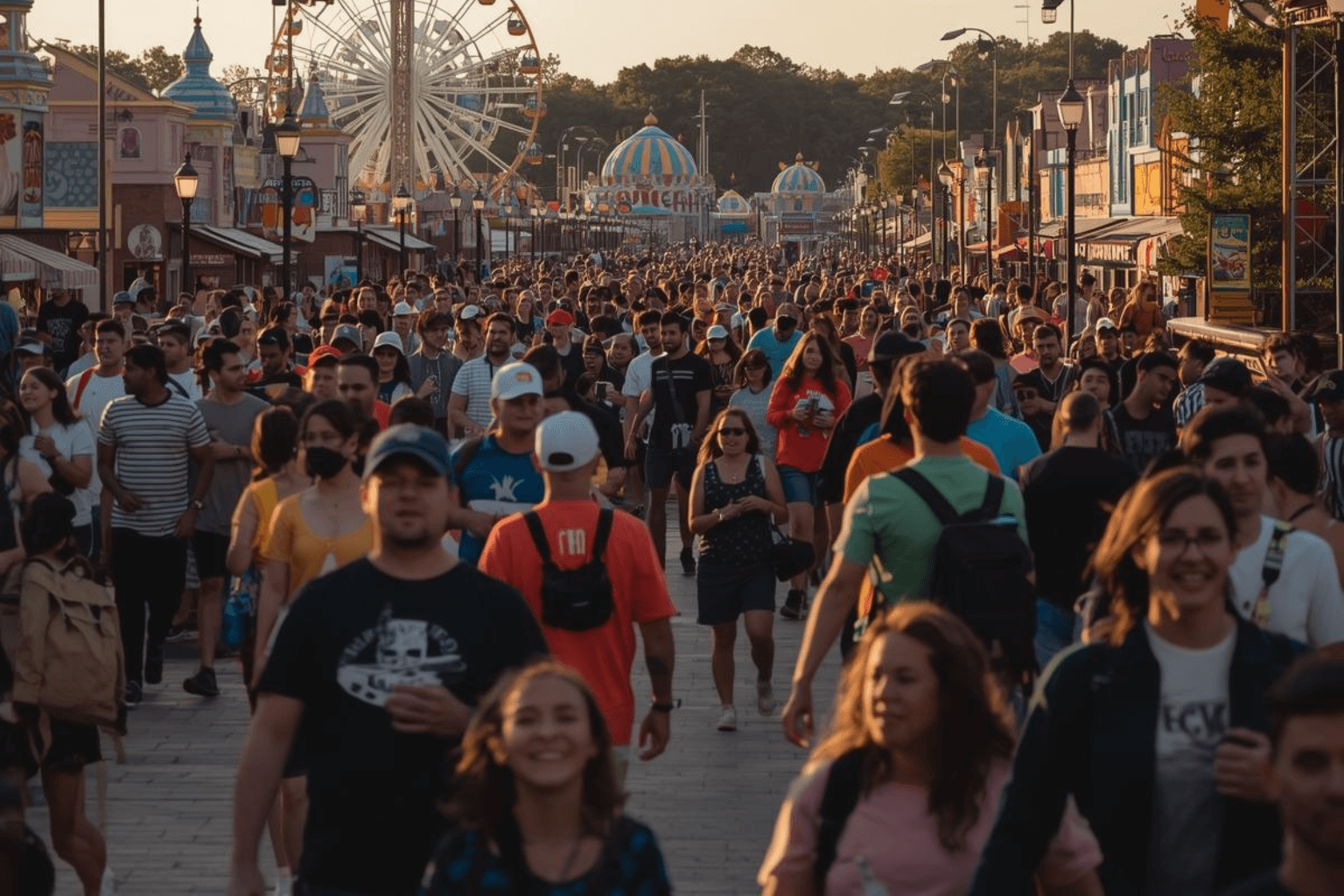
Amusement parks today are less about rides and more about worlds. Guests move through movie-set environments designed to look seamless, cinematic, and photogenic. Floors look like natural stone. Railings disappear into scenery. Lighting shifts dramatically from dark to bright. Water features spill across paths without visible drains.
At the same time, guests moving through these spaces are overloaded. They’re pushing strollers, carrying food, checking phones, managing kids, and navigating mobility devices. The result is a growing category of amusement park injury cases that happen not during the thrill, but during transitions: ride exits, moving walkways, ramps, stairs, queue pinch points, and wet pathways.
When we’re designing movie-style sets and funneling airport-level crowds through them, injuries become inevitable.
For a free legal consultation, call (877) 735-7035
What Makes These Injuries Legally Different
Traditional amusement park claims focused on ride malfunctions. Today’s cases often hinge on premises liability and engineering.
Design choices that create risk include:
- Flooring that looks like rock but lacks safe traction when wet
- Hidden drainage that allows water to sheet across walkways
- Seamless flooring that disguises grade changes and thresholds
- Minimal or aesthetic-first signage that fails to warn clearly
- Understaffed or poorly positioned attendants at exits
The question courts increasingly ask is not “Was the ride thrilling?” but “Was the environment reasonably safe for foreseeable guest behavior?”
High-Profile Amusement Park Injury Cases
Universal Studios Hollywood
A jury awarded $7.25 million to a 74-year-old guest who fell while exiting Harry Potter and the Forbidden Journey at Universal Studios Hollywood. She had been removed from the ride due to a harness issue and was injured while transitioning from a moving walkway to a stationary surface.
The claim wasn’t about the ride itself. It centered on design, lighting, and the disorienting nature of the exit zone, where guests are most vulnerable.
Disney Water Parks
Lawsuits involving waterslides at Disney Blizzard Beach and Disney Typhoon Lagoon highlight another pattern. Guests allege injuries (sometimes, catastrophic injuries), tied not to mechanical failure, but to unclear instructions, inconsistent enforcement of safety rules, and insufficient staffing at ride exits.
Water parks magnify the problem: wet surfaces, slopes, body positioning requirements, and split-second decisions collide with human error. Legally, the issue becomes whether parks did enough to anticipate foreseeable misuse.
Icon Park
The most extreme example came from the wrongful death of Tyre Sampson on the Orlando FreeFall ride at Icon Park. A Florida jury later awarded $310 million against the manufacturer, and the tragedy led to new state legislation.
Click to contact our personal injury lawyers today
What the Injury Data Doesn’t Show
Most amusement park injuries are never publicly disclosed. In states like Florida, parks self-report only a narrow subset of incidents, typically those involving hospitalization longer than 24 hours. That means the data the public sees represents only a fraction of what actually happens.
Legally, this creates a transparency gap. Patterns emerge only through lawsuits, not public reporting.
Complete a Free Case Evaluation form now
How Long-Term Expansion Locks in Risk
Major amusement park expansions take years to plan and execute. Super Nintendo World at Universal Studios Hollywood, for example, took roughly four years from the start of construction to its public opening.
That timeline matters because many of the most consequential safety decisions are made long before the first guest ever walks through the land.
Choices about flooring materials, drainage placement, railing height, queue geometry, evacuation routes, and staff sightlines are typically finalized early in the design phase, when aesthetics, throughput, and immersion are driving the conversation.
By the time an attraction opens, operations teams are largely inheriting those decisions, not shaping them.
“We’re handling a case right now where a guest slipped and fell at Super Nintendo World after light rain,” says Alex Boris, Senior Trial Attorney at J&Y Law. “The surface looked like a video game, which was the whole point. But once it got wet, it turned into a skating rink. In Southern California, it doesn’t rain often, but that’s no excuse. If you design an amusement park, you still have to account for liquids ending up on the ground, whether from rain or someone spilling a drink.”
When injuries occur, courts don’t just examine what happened in the moment. They often trace responsibility back to the original design choices and ask whether the risks were foreseeable at the planning stage.
Common Safety Gaps Behind Amusement Park Injury Claims
Across cases, the same vulnerabilities appear again and again:
- Transitions from moving to stationary surfaces
- Wet-to-dry flooring changes
- Dark-to-bright lighting shifts
- Scenic bottlenecks that compress crowds
- Hidden hazards disguised for immersion
- Delayed or understaffed response at exits
“Immersion doesn’t get a free pass under the law,” adds Boris. “If your design hides hazards to look cool, and someone gets hurt, that’s negligence, not innovation. Courts are catching up to this. A park can spend millions on theming, but if they miss basic human behavior – where people walk, how they move, what they carry – then they’re building in risk from day one.”
What Parks Could Fix Tomorrow
Many of these risks are solvable without sacrificing experience:
- Independent traction audits of themed surfaces
- Redesign of exit transitions and walkways
- Clear, conspicuous safety signage
- Strategic staffing at high-risk zones
- Third-party injury reporting and transparency
The law doesn’t require parks to eliminate risk. It requires them to act reasonably considering what they know.
When an Amusement Park Injury Becomes a Legal Issue
An amusement park injury isn’t just about what happened in a moment. It’s about whether safety was quietly traded for immersion long before the guest arrived.
If you or someone you love was injured at a theme park – especially in an exit, walkway, queue, or transition area – those design and operational decisions matter. Talk to our personal injury attorneys today about your amusement park experience and start building your case before critical evidence disappears.
Call or text (877) 735-7035 or complete a Free Case Evaluation form