
What Is the Hardest Injury to Prove? Understanding CRPS

Key Takeaways
- Complex Regional Pain Syndrome (CRPS) is widely considered one of the hardest injuries to prove in both medical and legal settings.
- CRPS causes severe, persistent pain that is often out of proportion to the original injury and difficult to confirm through imaging or lab tests.
- The condition involves maladaptive responses in the nervous and immune systems, not ongoing tissue damage.
- Because CRPS is largely an “invisible injury,” it is frequently misunderstood, minimized, or challenged in personal injury claims.
- The difficulty with CRPS is not whether the pain is real, but whether existing systems know how to recognize and value it.
What Is Complex Regional Pain Syndrome (CRPS)?
CRPS is a chronic pain condition that most often affects an arm or a leg following an injury, surgery, stroke, or other trauma. Medical experts describe CRPS as a neuroinflammatory and dysautonomia disorder involving abnormal signaling between the nervous and immune systems.
Symptoms may include burning or stabbing pain, swelling, hypersensitivity to touch, temperature changes, color changes in the skin, and altered skin texture. These symptoms often persist long after the original injury should have healed and may not be explained by imaging or objective testing.
For a free legal consultation, call (877) 735-7035
What Makes CRPS the Hardest Injury to Prove?
Some injuries announce themselves clearly. A fracture appears on an X-ray. A torn ligament shows up on an MRI. CRPS does neither.
Complex Regional Pain Syndrome typically develops after an injury that appears minor or expected to heal. Instead of resolving, the pain persists, intensifies, and spreads. To an outside observer, severity can seem disproportionate. To the person living with CRPS, the pain can be constant and overwhelming.
This gap between visible injury and lived experience is why CRPS is often called the hardest injury to prove. Not because it is rare or imaginary, but because the systems used to evaluate injury were built to measure structural damage—not nervous system dysfunction. A skilled personal injury attorney in Los Angeles can assess all the damages you’ve suffered and build a solid case to fight for maximum compensation – not just a fraction of it.
Why Does CRPS Pain Seem Out of Proportion to the Injury?
CRPS disrupts how the nervous system processes pain.
Unlike acute pain caused by tissue damage, CRPS pain is believed to involve central sensitization—where the brain continues to amplify pain signals even when there is no ongoing physical injury. This type of pain is sometimes referred to as nociplastic pain.
As a result, ordinary stimuli such as light touch or mild temperature changes can cause intense pain. The injury may look insignificant on paper, but the nervous system continues to respond as if danger is present.
Why Is CRPS So Difficult to Diagnose?
Pain is inherently subjective. There is no blood test, scan, or device that can objectively measure its intensity.
Because CRPS often lacks clear physical markers, diagnosis depends on clinical criteria, patient history, and symptom patterns rather than definitive testing. This uncertainty can delay diagnosis and leave patients feeling dismissed or misunderstood.
“It’s one of the worst diseases I have ever come across,” says Alex Boris, Senior Trial Attorney at J&Y Law. “I had a case where a woman tripped over a step with a worn-down reflective tape warning, and that one misstep led to years of burning pain from CRPS. Even putting on clothing ran chills of pain through her body. You can’t see that kind of suffering on an MRI, but you can feel it when you talk to your client and understand her story. My job is to make sure the jury feels what she’s living with.”
The absence of visible proof does not mean the condition is psychological or imagined. It reflects the current limits of medical science in measuring chronic pain.
Psychological Factors on CRPS Pain
CRPS is not a psychological condition, but psychology plays a significant role in how pain is experienced.
Research shows that people with CRPS often experience higher levels of perceived injustice and pain catastrophizing—patterns where pain is interpreted as overwhelming or life-altering. These reactions do not cause CRPS, but they can intensify pain by keeping the nervous system in a heightened state of alert.
Emotion, memory, and expectation shape how the brain interprets pain signals, making chronic pain more severe and persistent.
Why Pain Is One of the Most Misunderstood Human Experiences
Pain is not just a physical signal. It is both a sensory and emotional experience.
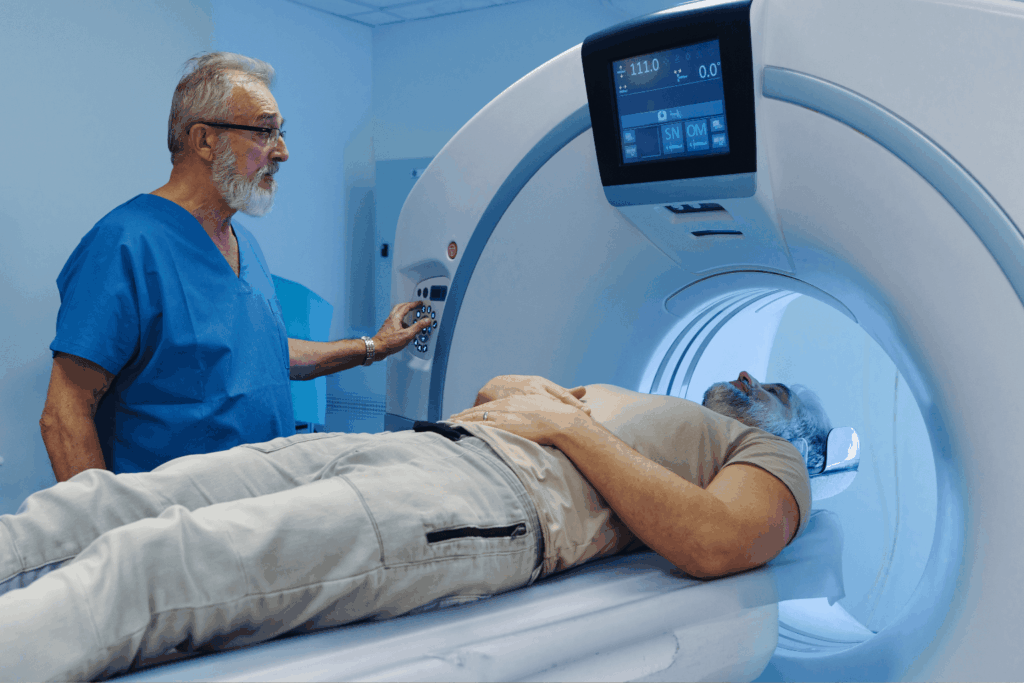
Unlike injuries that can be seen on imaging, conditions like CRPS lack clear biomarkers. This makes pain easier to doubt and harder to validate, even though it can profoundly affect daily life.
The disconnect between subjective experience and objective evidence is one of the reasons chronic pain is so frequently misunderstood in both medical and legal settings.
Click to contact our personal injury lawyers today
How Does CRPS Affect Personal Injury Claims?
In personal injury law, pain and suffering are among the most contested forms of damages, and CRPS sits at the center of that conflict.
Because CRPS does not always appear on scans, insurers and defense teams often question its severity or legitimacy. These injuries are sometimes labeled “invisible,” making them easier to challenge despite their impact.
Real-Life Testimonial from J&Y Law
“I had a client who developed CRPS after a big box store employee slammed him with a row of carts,” says Parham Nikfarjam, Senior Trial Attorney at J&Y Law. “He went through multiple surgeries, but the pain only got worse. These cases are tough. Adjusters push back hard. That’s why going to your appointments, documenting everything, and working with a team that knows how to build your case is critical. A lot of negotiation is really education. We want to show the other side what this injury has taken from you. And if they won’t listen, we’ll take it to trial and let a jury decide.”
What Makes CRPS More Than a Physical Injury?
CRPS affects far more than the body.
People living with CRPS often experience anxiety, depression, social withdrawal, difficulty working, and a diminished quality of life. These consequences are not secondary; they are intertwined with the condition itself.
When the nervous system remains sensitized long after an injury, the brain continues to interpret normal signals as threats, keeping pain active and persistent.
How Is Pain Valued in Legal and Medical Contexts?
Because pain cannot be objectively measured, both legal and medical systems rely on indirect evidence. This may include patient testimony, pain diaries, expert opinions, and documentation of functional limitations.
Without clear biomarkers, the value assigned to pain and suffering can vary widely. This variability often leaves people with CRPS feeling invalidated or dismissed, even when their condition is severe.
Complete a Free Case Evaluation form now
Pain Is an Experience, Not a Symptom. And It Can Be Compensated.
CRPS exposes a fundamental truth about pain: it does not always follow rules that are easy to see or measure.
Chronic pain is neurologically complex and deeply personal. Its impact cannot always be proven with scans or lab results, but that does not make it any less real. Understanding CRPS means recognizing that pain is not just a symptom—it is a lived human experience that deserves to be taken seriously, even when it defies simple explanation.
If you or a loved one is suffering from accident injuries caused by a third party, you can pursue compensation. Don’t miss the chance of obtaining justice and the award you’re entitled to by law – call J&Y Law at (877) 720-8813 to schedule a free consultation. Hablamos Español.
Call or text (877) 735-7035 or complete a Free Case Evaluation form