Slip and Fall in a Store Bathroom: Why Inspection Logs Can Make or Break Your Case

Key Takeaways
- California stores have a duty to keep customer restrooms reasonably safe, including regularly inspecting them for hazards.
- Because cameras generally cannot record inside restrooms, cleaning logs and inspection records can become some of the strongest evidence after a bathroom slip and fall.
- A store may still be responsible even if no employee saw the hazard, particularly if a reasonable inspection should have discovered it.
- Hallway security footage can help confirm whether employees entered the restroom when inspection records say they did.
- Bathroom evidence can disappear quickly, so photographs, inspection logs and preservation requests should be addressed as soon as possible after an injury.
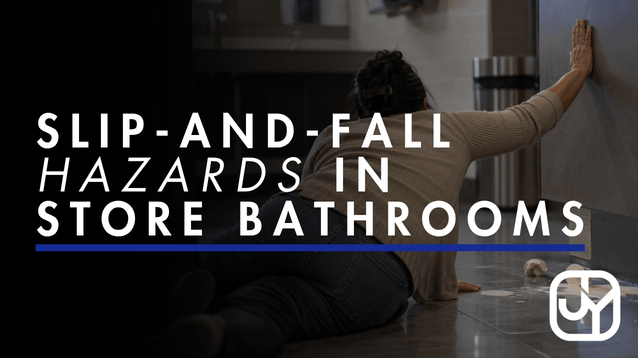
A slip and fall in a store bathroom can be harder to investigate than one that happens in an aisle or checkout area. You may have been alone, no one may have seen the fall, and there usually will not be security footage showing exactly what happened.
So, where’s the evidence?
In many bathroom injury cases, the most useful evidence is the store’s own paperwork. Inspection logs, cleaning records and even hallway security footage can help establish when the restroom was last checked, whether employees followed store policy, and how long a dangerous condition may have been there.
Who Is Responsible When You Get Hurt in a Store Bathroom?
In California, a store can be responsible for a dangerous bathroom condition if it knew about the hazard, or should have known about it, and failed to fix it or warn customers.
That second part is often where the case gets more complicated. A store does not necessarily avoid responsibility simply because no employee saw the puddle, broken fixture, or other hazard before someone was hurt.
California law recognizes what is known as constructive notice. If a dangerous condition existed long enough that a reasonable inspection should have found it, the business may still be held responsible.
A leading California case on this issue is Ortega v. Kmart Corp. In that case, a shopper slipped on spilled milk, but there was no evidence showing exactly how long the spill had been there. Kmart also did not have written inspection records showing when the area had last been checked.
The California Supreme Court held that a customer could use the absence of a reasonable inspection to help establish that the business should have known about the hazard. That rule is now reflected in California’s jury instructions on premises liability.
For a free legal consultation, call (877) 735-7035
How Often Should a Store Check Its Bathrooms?
California law does not require every business to inspect a restroom at a specific number of minutes. What is “reasonable” depends on the circumstances. A busy grocery store with constant restroom traffic may need more frequent inspections than a small store with only a handful of customers each hour. Restrooms also create predictable risks because sinks, toilets, and hand dryers can regularly put water on the floor.
This is where a store’s own inspection policies can become important. If employees are supposed to check the restroom every 30 minutes, those records can be compared with what actually happened on the day of the fall.
The question is not simply whether the store had an inspection schedule. It is whether employees followed it and whether the business can prove they did.
Why the Bathroom Inspection Log Is So Important
Many customers have seen a paper checklist hanging behind a restroom door with times and employee initials. Larger stores may use electronic systems that create a time-stamped record when an employee scans a code or device inside the restroom.
These records may be called cleaning logs, sweep sheets, inspection reports, or restroom checklists, but they all serve to document when an employee last inspected an area before someone was injured.
A review of those records can uncover problems that are easy to miss at first. There may be a long gap between inspections even though company policy calls for more frequent checks. Entries may appear to have been completed later, or records may show an employee supposedly inspecting a restroom while payroll records indicate that person was not working.
Sometimes there is no inspection log at all.
That can become important when a store later argues that employees were regularly checking the area but have no documentation to support the claim.
These records also may not be kept indefinitely. Paper logs can be discarded, while an outside janitorial company may maintain its own records separately from the store. That is one reason early preservation requests can be so important after a serious bathroom injury.
Click to contact our personal injury lawyers today
No Camera in the Bathroom Does Not Mean There Is No Video Evidence
Privacy laws generally prevent businesses from installing cameras inside restrooms, which changes the way these cases are investigated.
There will usually be no recording showing a puddle, the broken toilet seat, or the exact moment someone falls. That can make it harder to determine how long a hazard existed or whether an employee walked past it without taking action.
But the lack of restroom video affects the store, too.
A business cannot rely on footage from inside the restroom to argue that the floor was clear moments earlier or that the customer caused the condition. Inspection records therefore become even more important.
There may also be useful video immediately outside the restroom. Hallway cameras can show when employees entered and exited, who used the restroom before the injured person and how quickly staff responded afterward. That footage may also help test whether an inspection log is accurate.
Security footage can be overwritten within days or weeks, so waiting too long to request it can leave an important gap in the investigation.
Complete a Free Case Evaluation form now
Common Hazards in Store Bathrooms
Wet floors are one of the most obvious restroom hazards, but they are far from the only way someone can be injured.
Leaking toilets, dripping sinks, freshly mopped floors and water around hand dryers can create slippery tile. Loose toilet seats or toilets that are not properly secured can move unexpectedly. Grab bars, sinks, paper towel dispensers, and other wall-mounted fixtures can also fail when they have not been installed or maintained properly.
Other common hazards include cracked tile, raised thresholds, torn mats, poor lighting, and heavy or defective doors.
These accidents can cause serious injuries, particularly when someone falls onto hard tile or porcelain. Head injuries, broken wrists, hip fractures, back and neck injuries, and deep cuts from broken fixtures are among the injuries associated with bathroom accidents.
What to Do After a Slip and Fall in a Store Bathroom
Evidence in a restroom can disappear quickly. An employee may mop the floor, remove a damaged fixture, or replace the inspection sheet shortly after the incident.
If you can safely do so, photograph the condition before anything is cleaned or moved. Take wide photographs showing the area and closer images of the water, broken fixture, uneven flooring or whatever caused the fall. If a paper inspection log is posted inside the restroom, take a clear photograph of that as well.
Record the exact time of the fall, report the incident to a manager and ask that an incident report be created. Get the names and contact information of anyone who saw the condition before or after the accident, including employees who responded.
Medical care should also come first. Some injuries, particularly concussions and back injuries, may not become obvious until hours later. Keeping the clothing and shoes you were wearing can also preserve evidence of water or other residue from the floor.
What If No One Saw You Fall?
Most bathroom accidents happen without an eyewitness. That alone does not prevent someone from bringing a claim.
The investigation may instead rely on photographs, inspection records, hallway video, incident reports, witness accounts from people who saw the condition before or afterward, and medical records documenting the injuries.
Can a Store Be Responsible for a Broken Toilet, Sink, or Grab Bar?
Businesses are expected to reasonably maintain fixtures used by customers. A loose toilet seat, unstable sink, damaged grab bar or falling dispenser may raise questions about how long the problem existed and whether routine maintenance should have caught it.
Depending on who owned, installed or maintained the fixture, responsibility may extend beyond the store itself to a property owner, maintenance company or another business involved in caring for the premises.
What If the Store Says You Were Partly Responsible?
California follows a pure comparative fault system. That means an injured person may still recover compensation even if they are found partly responsible for the accident, although their recovery can be reduced by their percentage of fault.
Stores and their insurers may argue that a customer should have seen the hazard, was wearing inappropriate footwear or was not paying attention. Those arguments are only part of the analysis. The store’s own conduct, including how often it inspected the restroom and whether employees followed its safety procedures, still needs to be examined.
How Long Do You Have to File a Bathroom Injury Claim in California?
In most California personal injury cases, the deadline to file a lawsuit is two years from the date of injury.
Claims involving government property can have much shorter deadlines. If the restroom belongs to a public library, transit station, city park or other government agency, a formal government claim generally must be filed within six months.
The practical deadline for preserving evidence can be much shorter than either of those.
Inspection logs may be discarded and surveillance footage may be overwritten within weeks. By the time someone reaches the legal filing deadline, some of the best evidence may already be gone.
Hurt in a Store Bathroom? J&Y Law Can Help
Bathroom injury cases often come down to records most customers would never think of asking for, including cleaning and inspection logs. At J&Y Law, our premises liability attorneys look at how the hazard developed, when the area was last checked and whether the business followed its own safety procedures. Because some of that evidence can disappear quickly, starting the investigation early can be critical.
If you were seriously injured in a store bathroom anywhere in California, contact J&Y Law to discuss what happened and learn more about your legal options.
Call or text (877) 735-7035 or complete a Free Case Evaluation form